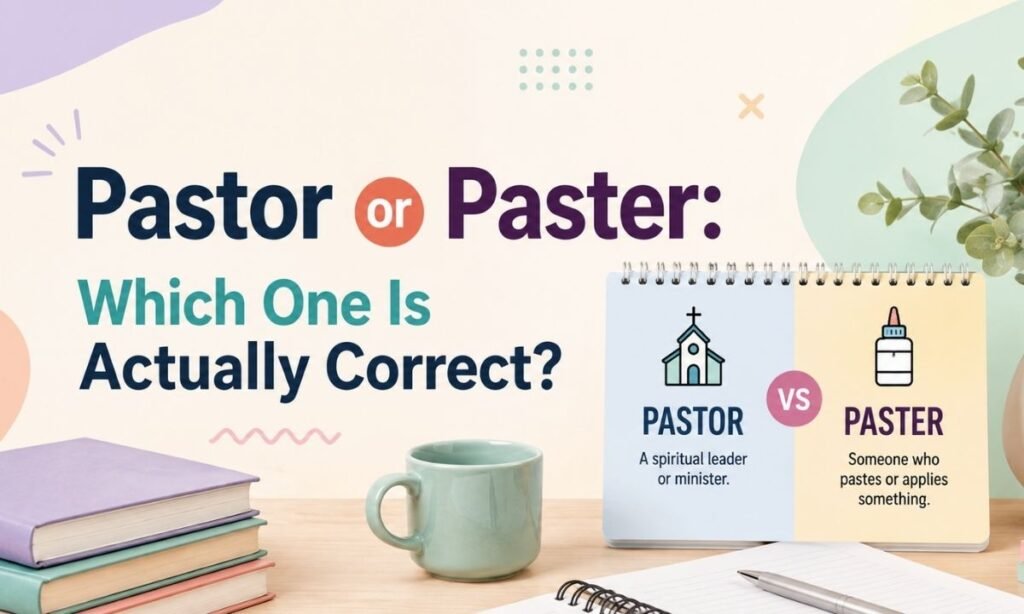
English is full of near twin words that trip up even careful writers, and Pastor or Paster is a perfect example. One letter separates a respected religious title from a word most people have rarely used in daily conversation.
If you have ever paused mid-sentence wondering which spelling belongs in your email, sermon note, or school assignment, you are not alone. This guide breaks down both words clearly, so you can write with confidence every single time.
What Pastor Really Means?
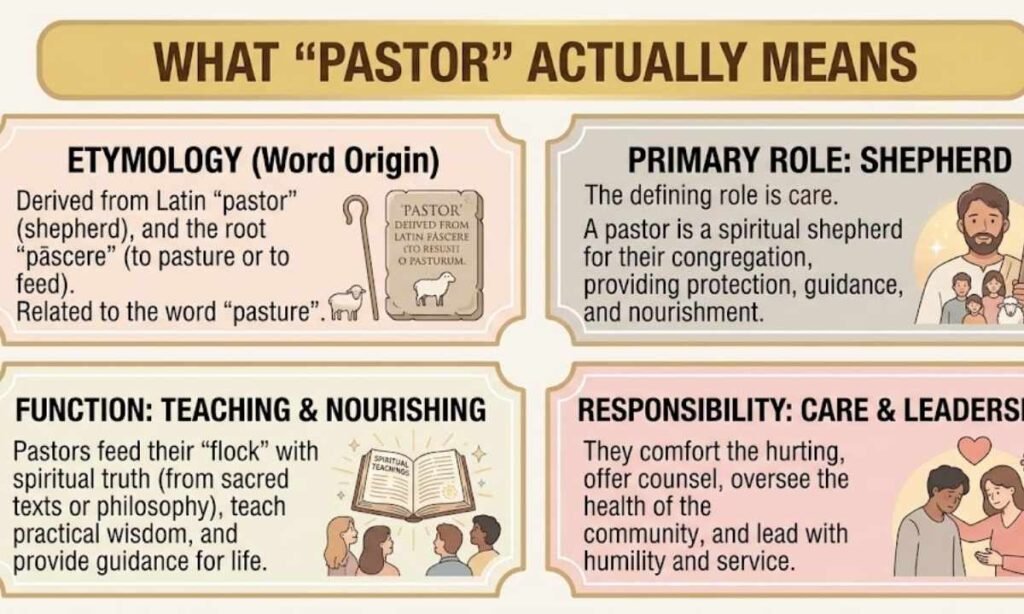
A pastor is a person who leads a church congregation, delivers sermons, and offers spiritual guidance to members of a religious community. The word is almost always tied to Christianity and church leadership, and it functions as a formal title, similar to doctor or professor.
Pastors typically handle several responsibilities within their congregation, including:
- Leading weekly worship services
- Preparing and delivering sermons
- Counseling members during difficult times
- Officiating weddings, baptisms, and funerals
- Guiding church staff and volunteer teams
The word can occasionally work as a verb in informal speech, as in “she pastors a small church downtown,” though this usage is far less common than the noun form.
What Paster Actually Means?
Paster is a real, dictionary recognized word, though it rarely appears outside specialized fields. It describes a person or a tool that applies paste, glue, or adhesive to a surface. Merriam Webster lists paster as one who pastes, while Collins Dictionary confirms both American and British definitions tied to bookbinding, printing, and labeling trades.
You will most often encounter this word in contexts such as:
- Print shops that attach labels to packaging
- Bookbinding and manuscript repair work
- Manufacturing lines that apply stickers or seals
- Craft or scrapbooking instructions
- Older printing press terminology
Because the term is uncommon, many spell checkers and readers assume it is simply a typo for pastor, which fuels ongoing confusion between the two words.
Also Read This: Wellbeing or Well-Being: Which Spelling Is Actually Correct?
Pastor vs Paster at a Glance
| Feature | Pastor | Paster |
| Core Meaning | Religious leader or minister | Someone or something that applies paste |
| Common Field | Church, ministry, religion | Printing, labeling, crafts, manufacturing |
| Word Frequency | Very common | Rare |
| Part of Speech | Noun, occasional informal verb | Noun only |
| Origin | Latin pastor, meaning shepherd | Paste plus the suffix er |
| Typical Sentence | The pastor greeted every family after service | The paster attached labels to each finished box |
Why These Two Words Keep Getting Mixed Up?
The confusion is not random. It comes down to a handful of predictable factors that show up again and again in writing and speech.
The spelling difference is a single vowel, which makes the words visually close enough for the eye to skip past on a quick read. Autocorrect tools often assume the paster is a mistake and quietly swap it for pastor, reinforcing the error over time. Spoken pronunciation adds another layer, since both words can sound nearly identical in fast or casual speech, especially across different regional accents.
Context ends up being the real tiebreaker. A sentence about church, faith, or a congregation almost certainly needs a pastor. A sentence about glue, labels, or printing equipment needs paster instead.
Where Each Word Comes From?
Pastor traces back through Middle English and Anglo French to the Latin word pastor, which literally meant shepherd. Oxford and Merriam Webster both confirm this shepherd origin, which explains the enduring metaphor of a pastor guiding and caring for their flock, meaning the congregation.
Paster has a far simpler backstory. It was formed by adding the agent suffix er to the verb paste, following the same pattern as words like painter or writer. There is no religious or historical weight behind it, only a straightforward description of function.
A Simple Memory Trick That Works

If you only remember one thing from this article, remember this: paster contains the word paste, and pastor does not.
Think of it this way:
- Pastor connects to a person, a title, and a place of worship
- Paster connects directly to paste, glue, and adhesive work
- When in doubt, ask whether the sentence is about religion or about sticking something down
That single question resolves the confusion almost every time.
Pastor and Paster in Real Sentences
Seeing both words used correctly side by side makes the distinction stick far better than definitions alone.
Pastor in context:
- The new pastor introduced himself to the congregation on Sunday morning.
- Our pastor has led this church for nearly fifteen years.
- She recently accepted a position as associate pastor at a growing parish.
Paster in context:
- The paster carefully applied each label to the finished product boxes.
- His job as a paster involved binding old manuscripts with archival glue.
- The printing paster attached the covers before the books moved to shipping.
Common Sentence Corrections to Learn From
| Incorrect Sentence | Corrected Sentence |
| The paster delivered a moving sermon on Sunday | The pastor delivered a moving sermon on Sunday |
| The pastor glued the labels onto every box | The paster glued the labels onto every box |
| Our new pastor works at the print shop applying stickers | Our new paster works at the print shop applying stickers |
| The paster welcomed new members after the service | The pastor welcomed new members after the service |
Related Church Leadership Titles Worth Knowing
Since pastor often appears alongside other church titles, understanding a few related terms helps you write about ministry roles with more precision.
- Senior Pastor oversees the entire congregation and typically supervises other pastoral staff.
- Associate Pastor supports the senior pastor and often manages a specific ministry area, such as youth or outreach.
- Assistant Pastor handles administrative or program level duties under senior leadership.
- Interim Pastor serves temporarily while a congregation searches for permanent leadership.
None of these titles ever use the paster spelling, since they all describe variations of the same religious leadership role.
How Pastor Compares to Minister, Priest, and Preacher?
These four words are often used loosely, but they are not perfect synonyms.
A minister is a broad term covering ordained leaders across many Protestant denominations, and it sometimes overlaps directly with pastor. A priest typically serves within Catholic, Orthodox, or Anglican traditions and often carries additional sacramental duties that a pastor in other denominations may not perform. A preacher focuses specifically on delivering sermons and may or may not hold a formal leadership position within a church.
Pastor, by contrast, usually implies both spiritual leadership and ongoing pastoral care for a specific congregation.
Also Read This: Authorized vs Authorised: Which Spelling Should You Use
Quick Reference Checklist Before You Publish
Run through this short checklist any time you are unsure which word fits your sentence.
- Is the sentence about church, faith, or a congregation? Use pastor.
- Is the sentence about glue, labels, or adhesive work? Use paster.
- Does the sentence mention a title like senior, associate, or interim? Use pastor.
- Does the sentence mention printing, binding, or packaging? Use paster.
- Still unsure? Read the sentence aloud and picture the setting described.
Frequently Asked Questions
Is it pastor or paster?
It depends entirely on meaning. Pastor refers to a church leader, while paster refers to someone who applies paste or adhesive.
Is paster a real English word?
Yes, dictionaries including Merriam Webster and Collins confirm paster is a legitimate, though uncommon, English word.
What does pastor mean in simple terms?
A pastor is a religious leader who guides a congregation, preaches sermons, and offers spiritual support.
What does paster mean in simple terms?
A paster is a person or device that applies paste or adhesive, most often within printing or manufacturing work.
Are pastor and paster pronounced the same way?
They can sound similar in fast or casual speech, but their standard pronunciations remain distinct when spoken clearly.
Can pastor be used as a verb?
Occasionally, as in she pastors a growing church, though this usage remains far less common than the standard noun form.
What is the easiest way to remember the difference?
Notice that paster contains the word paste, while pastor does not contain that word at all.
Conclusion
Pastor and paster look nearly identical on paper, but they describe two completely different worlds. One belongs to church leadership and spiritual guidance, while the other belongs to glue, labels, and printing work.
Once you connect paster to paste and pastor to its shepherd origin, the correct choice becomes automatic, and your writing stays accurate every time.