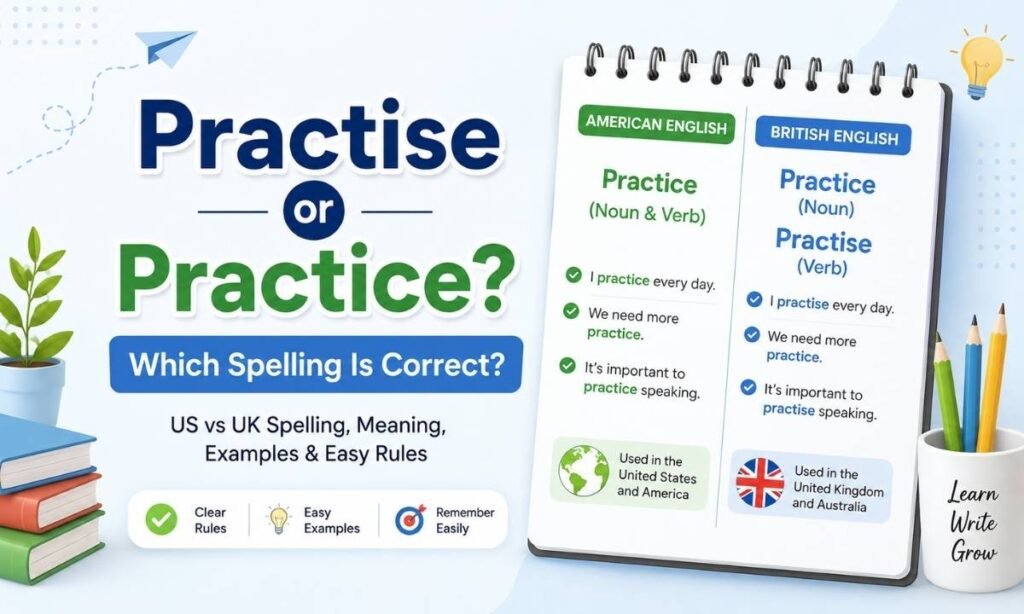
Both spellings are correct, but which one you should use depends entirely on where you are writing from. In American English, practice is the standard spelling for both the noun and the verb, so practise almost never appears in US writing.
In British English, the two words split roles: practice is the noun and practise is the verb. This guide walks through both rules with clear examples so you always pick the right spelling for your audience.
Practise or Practice: Which One Is Correct?
The short answer is that American English uses practice for everything, while British English separates practice as a noun from practise as a verb. Neither version is wrong, since the correct choice simply depends on the English variety you are writing in.
The Short Answer for American English
American writers use practice for both the noun and the verb in every situation. There is no separate verb spelling to remember.
The Short Answer for British English
British writers use practice only as a noun and reserve practise strictly for the verb form.
Why Both Spellings Appear Online?
Search results mix both spellings because writers from different countries, and different style guides, publish content side by side on the same topics.
Practice vs Practise: What Is the Difference?
| Word | American English | British English |
| Practice | Noun and Verb | Noun only |
| Practise | Not normally used | Verb only |
Practice With a C
The c spelling covers every use in American English and covers only the noun in British English.
Practise With an S
The s spelling exists purely as a British verb form and does not appear in standard American writing at all.
The Difference Depends on English Variety
Once you know which English variety you are writing in, the correct spelling becomes automatic rather than a guessing game.
When to Use Practice in American English
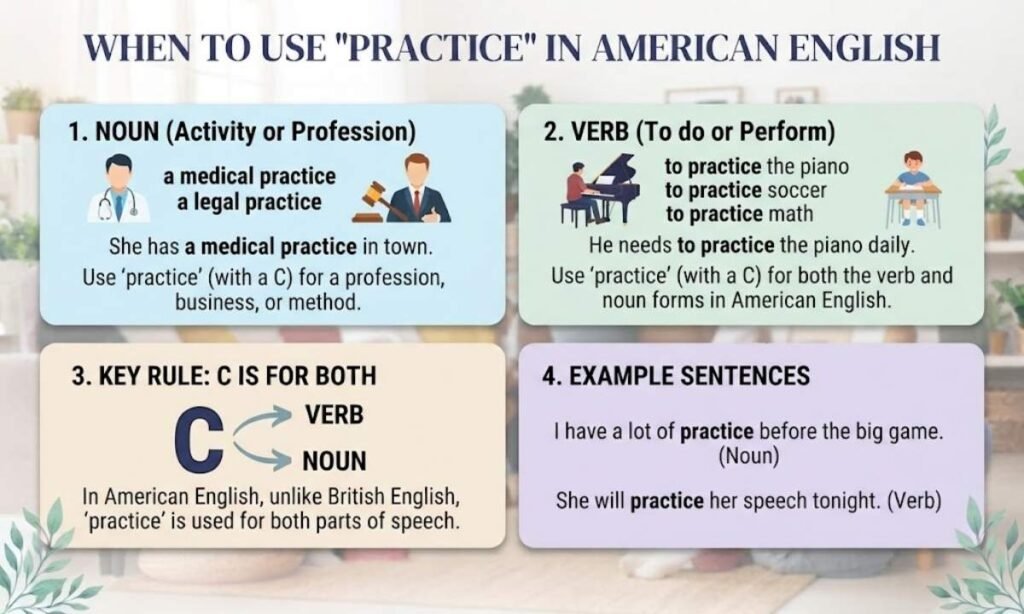
This section matters most if you are writing for a US audience, since practice covers every grammatical role here.
Practice as a Noun
Common examples include:
- soccer practice
- piano practice
- daily practice
- medical practice
Practice as a Verb
Common examples include:
- I practice every day.
- She practices the piano.
- They practice their presentation.
Practice in Professional English
Fields like medicine, law, and business all use practice for the verb form in American English, as in “doctors practice medicine” or “lawyers practice law.”
When to Use Practise in British English?
Practise functions only as a verb in British English, describing the action of doing something repeatedly.
Practise as a Verb
Typical examples include actions like practising a skill, a speech, or a routine.
Practise in Everyday Writing
In casual British writing, practise appears whenever someone is actively doing the activity rather than referring to it as a thing.
Practise in Professional Writing
Examples include:
- I practise the piano every morning.
- She practises her speech.
- They practise medicine.
Practice or Practise in American English
Do Americans Use Practise
Standard American English does not use practise, and most US style guides and dictionaries list it as a non standard spelling.
Is Practice Correct as a Verb in the US?
Yes, practice is the correct verb spelling throughout American English, alongside its role as a noun.
Which Spelling Should US Students Use?
US students should use practice consistently for both meanings in schoolwork, essays, and everyday writing.
Practice or Practise in British English
When British English Uses Practice
British English uses practice whenever the word functions as a noun, such as naming an activity or a professional office.
When British English Uses Practise
British English uses practise whenever the word functions as a verb describing an action being performed.
Easy Examples to See the Difference
“Football practice starts at six” uses the noun, while “I need to practise my scales” uses the verb.
Practice vs Practise Examples in Sentences
Practice as a Noun Examples
- Daily practice improves skills.
- She owns a legal practice.
Practice as a Verb US Examples
- He practices law in New York.
- We practice every weekend.
Practise as a Verb UK Examples
- He practises law in London.
- We practise every weekend.
Practice and Practise in the Same British Sentence
A useful example is “it is good practice to practise every day,” which shows the noun and verb sitting side by side naturally.
Practicing or Practising: Which Is Correct
The same regional split carries over into the ing form of the word.
Practicing in American English
American English uses practicing with a single c and no s throughout.
Practising in British English
British English uses practising with an s, matching the British verb spelling.
Practice, Practiced, and Practicing in US English
American verb forms stay consistent: practice, practiced, practicing, all spelled with a c.
Practise, Practised, and Practising in UK English
British verb forms stay consistent as well: practise, practised, practising, all spelled with an s.
Practice vs Practise in Common Phrases
Practice Makes Perfect
This phrase always uses practice, since it functions as a noun in both American and British English.
Best Practice or Best Practise
Best practice is correct everywhere, including in the UK, because the phrase uses practice as a noun.
Practice Exam or Practise Exam
Practice exam is correct everywhere as well, since exam is a noun being described by another noun.
Put Into Practice or Put Into Practise
The correct phrase is always put into practice, again because practice functions as a noun here.
Is Practise a Correct Spelling?
When Practise Is Correct
Practise is correct only as a verb, and only within British and other non American varieties of English.
When Practise Is Not Used
Practise is not used in American English at all, regardless of whether the word functions as a noun or verb.
Why Practise Looks Wrong to American Readers?
US readers rarely encounter the s spelling, so it can look like a typo even though it is fully correct in British English.
Is Practice a Noun or a Verb
Practice as a Noun
Example: I need more practice.
Practice as a Verb
Example: I need to practice more.
How Context Changes Its Grammatical Role?
In American English, spelling never changes based on grammar, so context alone tells you whether practice is functioning as a noun or a verb.
How to Remember Practice vs Practise?
The C Rule for American English
American English always uses the c spelling, practice, no matter the grammatical role.
The S Rule for British Verb Forms
British English uses the s spelling, practise, only when the word is acting as a verb.
The Advice vs Advise Trick
Advice is the noun and advise is the verb in both American and British English, and that same noun versus verb pattern mirrors how practice and practise split roles in British English.
Common Practice vs Practise Mistakes
- Using practise in American English writing
- Using practise as a noun in British English
- Confusing practicing with practising across regions
- Writing best practise instead of best practice
- Mixing US and UK spelling within the same document
Practice or Practise for School, Work, and Professional Writing
Which Spelling Should Students Use
Students should match whichever English variety their school or exam board follows, usually American in the US and British in the UK.
Which Spelling Should Businesses Use
Businesses should stay consistent with the spelling convention used by their primary audience or market.
Which Spelling Should You Use for a US Audience
Always use practice for both the noun and the verb when writing for American readers.
Which Spelling Should You Use for a UK Audience
Use practice for the noun and practise for the verb when writing for British readers.
Practice vs Practise vs Practicing vs Practising
| Form | US English | UK English |
| practice | noun and verb | noun only |
| practise | not normally used | verb only |
| practicing | correct | not used |
| practising | not used | correct |
Where This Spelling Rule Comes From?
The split between practice and practise follows the same pattern as several other English word pairs that separate c and s spellings by grammatical role. Historically, British English kept this distinction from earlier spelling conventions, while American English simplified it during Noah Webster’s dictionary reforms.
Practice vs Practise in Canada and Australia
Canadian and Australian English generally follow the British pattern, using practice as the noun and practise as the verb. However, Canadian usage can vary somewhat by publication, so checking a local style guide is always the safest approach.
Spell Check Tools and the Practice Practise Confusion
Many spell checkers default to American English, which can cause them to flag practise as an error even in British writing. Setting your word processor’s language to British or UK English fixes this issue and stops the tool from suggesting the wrong spelling.
Practice vs Practise in Formal Documents and Resumes
In resumes, contracts, and other formal documents, consistency matters more than which regional spelling you choose. Pick one convention based on your audience and apply it throughout the entire document without switching back and forth.
Similar Word Pairs That Follow the Same Pattern
Beyond advice and advise, English has other word pairs that split noun and verb spellings in British English, including licence and license, and defence and defense in some regional comparisons. Recognizing this pattern makes it easier to remember why practice and practise behave the way they do.
Frequently Asked Questions
Is it practice or practise in American English?
American English always uses practice for both the noun and the verb.
Is it practice or practise in British English?
British English uses practice as the noun and practise as the verb.
Is practise grammatically correct?
Yes, it is correct as a verb in British and other non American varieties of English.
Do Americans use the word practise?
No, standard American English does not use the s spelling at all.
Is practice a noun or a verb?
It can be both, and in American English the spelling stays the same either way.
Is it practicing or practising?
Practicing is American English, while practising is British English.
Is best practice or best practise correct?
Best practice is correct in both American and British English, since practice is a noun here.
Conclusion
For American English, use practice for both the noun and the verb in every situation. For British English, use practice as the noun and practise as the verb, keeping the two forms separate based on grammatical role.
Once you settle on which English variety you are writing for, the choice between practice and practise becomes simple and consistent across every sentence you write.