
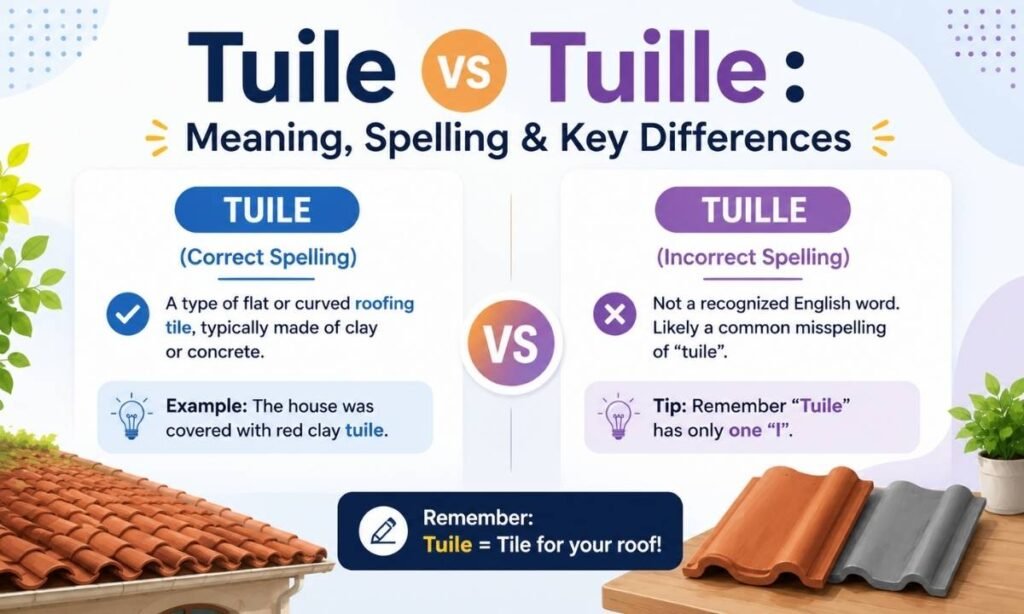
Anyone who bakes, reads menus, or studies medieval history has probably typed Tuille or Tuile into a search bar and paused. Tuile and tuille look almost identical, sound similar, and share a Latin root, yet they point to completely different worlds. One belongs on a dessert plate, the other on a suit of armor.
This guide breaks down the spelling, meaning, pronunciation, and origin of both words so you never mix them up again, whether you are writing a recipe, a menu, or a museum caption.
What Is a Tuile?
A tuile is a thin, crisp pastry that originated in French baking. The word itself is the French term for a roof tile, and the cookie earned that name because it is shaped, while still warm and pliable, into a gentle curve that resembles a curved roofing tile.
Bakers typically make tuile batter from egg whites, sugar, butter, and flour, then spread it thinly and bake it until the edges turn golden. While the cookie is still hot off the tray, it is draped over a rolling pin or a curved mold so it hardens into shape as it cools. Almond tuiles are the most familiar version, but chefs also make sesame, orange, chocolate, and even savory versions flavored with parmesan or herbs.
What Is a Tuille?
Tuille is a much older English word tied to medieval armor rather than food. According to Merriam-Webster and the American Heritage Dictionary, a tuille refers to one of the hinged steel plates that hung from the breastplate or fauld of a suit of plate armor to shield the front of the thigh. These plates were common in European armor design roughly between the fourteenth and sixteenth centuries.
Interestingly, some historians and etymologists have questioned whether the armor sense of tuille was ever a genuine, widely used term or whether it was popularized later by nineteenth century antiquarians misreading old manuscripts. Whatever its exact history, the word still appears in respected English dictionaries today, so it is not a fabricated or invalid spelling, just a specialized one.
Tuile or Tuille at a Glance
| Feature | Tuile | Tuille |
| Number of Ls | One L | Two Ls |
| Field | Culinary, baking | Medieval armor, history |
| Language Origin | Modern French for tile | Middle English, via Old French |
| Typical Use | Recipes, menus, pastry blogs | Museum descriptions, armor history texts |
| Pronunciation | Approximately tweel | Approximately tweel (same sound) |
| Common Mistake | Adding a second L | Using it for food instead of armor |
Tuile vs Tuille vs Tulle
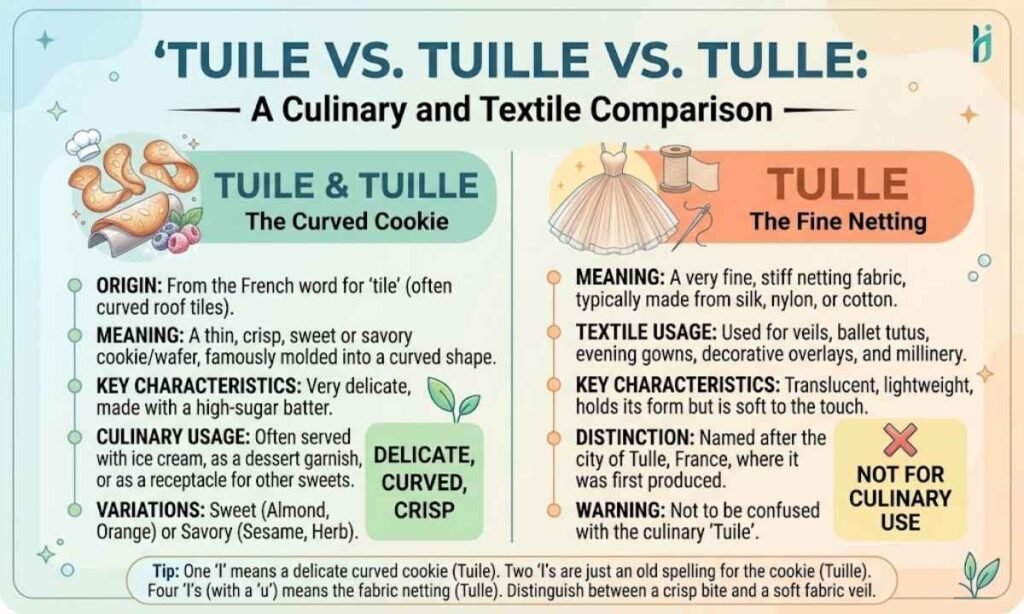
A third word often joins this confusion: tulle, the lightweight net fabric used in veils, tutus, and gift wrapping. Although tuile, tuille, and tulle look alike on the page, they are unrelated in meaning and should never be swapped for one another in writing.
| Word | Category | Meaning |
| Tuile | Food and architecture | Thin pastry or a roof tile |
| Tuille | Armor and history | Thigh plate in medieval armor |
| Tulle | Textile | Fine, lightweight net fabric |
Which Spelling Is Correct for the Cookie
If the goal is a recipe, a bakery menu, or a description of a dessert, the correct spelling is always tuile with a single L. The double L version, tuille, does not belong in a food context at all, since dictionaries reserve that spelling for the armor plate. Writers, recipe bloggers, and restaurant menus that use tuille to describe a pastry are making a spelling error, even though the mistake is understandable given how close the two words look.
How to Pronounce Tuile and Tuille?
Both words share nearly the same pronunciation in English, roughly rendered as tweel, rhyming with wheel. The French pronunciation of tuile leans slightly softer, closer to tweel with a lighter final sound, while English speakers using tuille in a historical context tend to pronounce it the same way. Since the sound is identical or nearly identical for both spellings, pronunciation alone will not help you choose the right word; context and meaning are what matter.
Where Tuille Comes From?
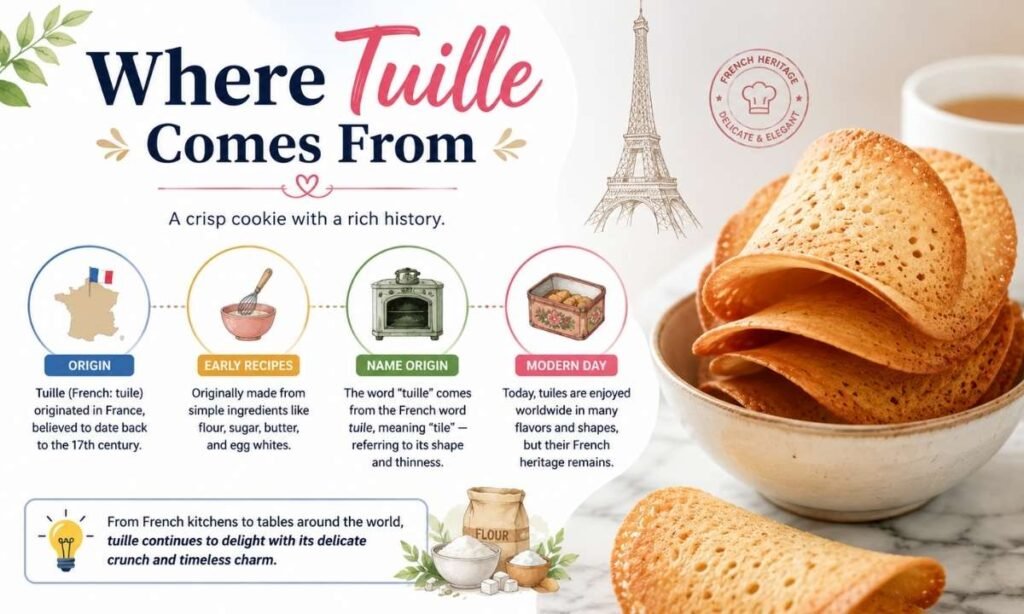
Tuille traces back to Middle English toile, which itself came from Anglo-Norman and Old French terms for a roofing tile, ultimately rooted in the Latin word tegula. Language historians note that the armor sense of the word appears in only a small number of medieval manuscripts, and some scholars argue the original texts may have referred to fabric or weaponry rather than a specific armor plate. Despite that debate, major dictionaries such as Merriam-Webster, Collins, and the American Heritage Dictionary continue to list tuille as a recognized English noun for the thigh armor plate.
Where Tuile Comes From?
Tuile is the modern French word for roof tile, and it carries no armor meaning whatsoever in French. Pastry chefs adopted the word because the finished cookie, once curved and cooled, visually echoes the shape of a curved terracotta roof tile on a French or Mediterranean building. English speakers borrowed the culinary term directly from French cooking vocabulary, and it entered English cookbooks and professional kitchens as French pastry techniques spread internationally.
What Is a Tuile Cookie Made Of?
Classic tuile batter relies on a short list of ingredients, and small changes in ratio create very different textures.
- Egg whites, which bind the batter and help create a light structure
- Granulated sugar, which caramelizes as the cookie bakes
- All purpose flour, which gives the tuile enough body to hold its shape
- Melted butter, which adds crispness and helps the batter spread thin
- Optional additions such as sliced almonds, sesame seeds, citrus zest, or cocoa powder
Because the batter is spread very thin before baking, tuiles bake quickly and require close attention, since a few extra seconds in the oven can push them from golden to burnt.
How Tuiles Are Shaped?
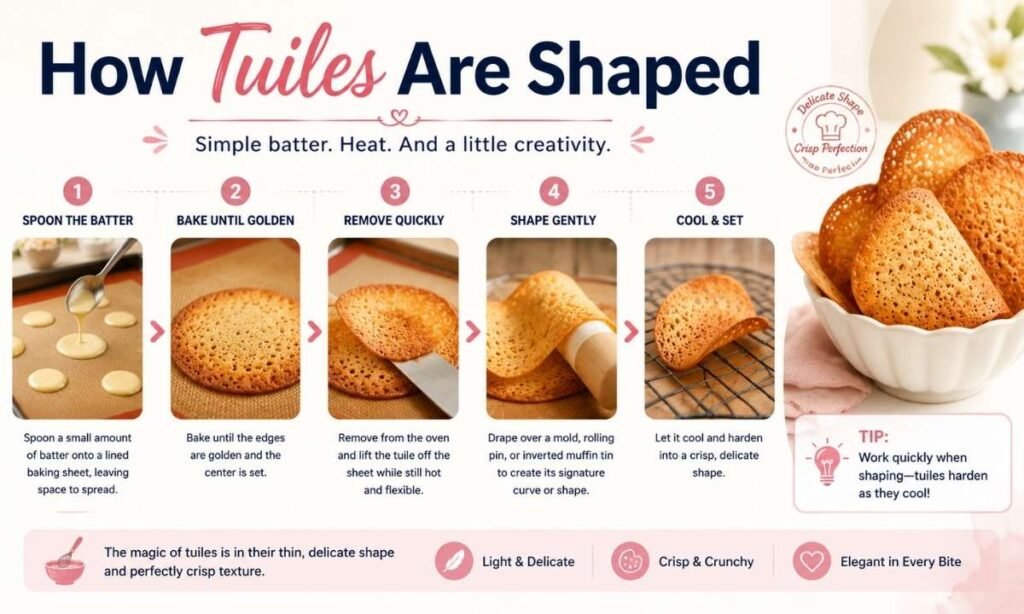
The defining trick of tuile baking is timing. The cookie is soft and pliable only for a short window right after it leaves the oven, so bakers work fast to drape it over a rolling pin, a bottle, or a curved mold. As the sugar cools, it hardens and locks the curved shape in place, giving the tuile its signature look and its satisfying, brittle snap.
Sweet and Savory Tuile Variations
Tuiles are not limited to dessert plates. Pastry chefs use sweet almond or citrus tuiles as elegant garnishes for ice cream, mousse, and plated desserts, while savory versions made with parmesan, black pepper, or herbs often top salads, soups, or seafood dishes. This flexibility is one reason tuile shows up so often on modern restaurant menus, far beyond traditional French bakeries.
Common Spelling Mistakes to Avoid
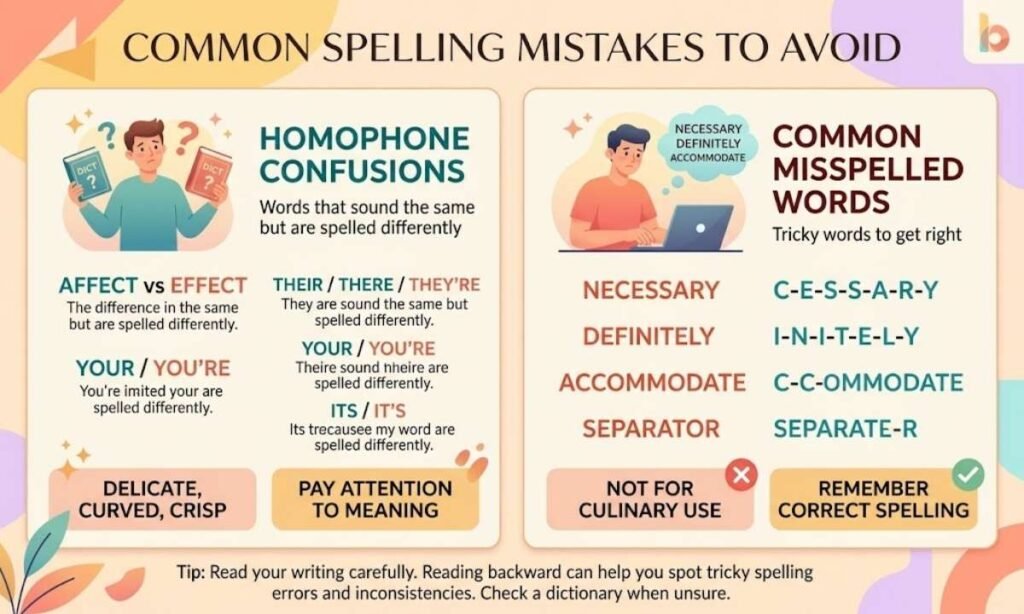
- Writing tuille cookie instead of tuile cookie on a recipe or menu
- Assuming tuille is always a typo, when it is actually a legitimate historical armor term
- Confusing either word with tulle, the net fabric used in fashion and event decor
- Adding an unnecessary second L to tuile out of habit or autocorrect
Example Sentences
- The pastry chef balanced a crisp almond tuile on top of the panna cotta.
- The museum display included a suit of armor complete with its original tuilles protecting the thigh.
- Her wedding gown featured layers of soft tulle rather than any kind of tuile decoration.
- A savory parmesan tuile added crunch to the roasted tomato soup.
Quick Memory Trick
A simple rule can settle the spelling question in seconds: one L means tuile, and that spelling belongs to pastry and tile. Two Ls mean tuille, and that spelling belongs to armor and history. Everything else, including tulle fabric, falls outside this pair entirely and should never be substituted for either word.
Frequently Asked Questions
Is it tuille or tuile for a cookie?
It is tuile, spelled with one L, for any pastry, cookie, or dessert garnish.
Is tuille a real word?
Yes, tuille is a recognized English word referring to a medieval thigh armor plate.
How do you pronounce tuile?
Tuile is pronounced roughly like tweel, rhyming with wheel.
What does tuille mean in history?
Tuille describes a hinged steel plate that protected the thigh in medieval plate armor.
What is a tuile made of?
A tuile is typically made from egg whites, sugar, flour, and melted butter, sometimes with almonds.
Is tuile the same as tulle?
No, tulle is a fine net fabric used in fashion, while tuile is a pastry or roof tile term.
Why is the cookie called a tuile?
It is named after the French word for roof tile because its curved shape resembles one.
Conclusion
For recipes, menus, and anything related to baking, the correct spelling is tuile. Tuille remains a legitimate, dictionary recognized English word, but its meaning belongs strictly to medieval armor history, so the two spellings should never be treated as interchangeable typos of one another.