Many English learners and even native speakers pause for a second when typing this word, unsure whether Habbit vs Habit takes one letter or two. That small hesitation is exactly why this mix-up shows up in search bars every day.
This guide settles the spelling question in the first line, then walks through what the word actually means, how it is used in real sentences, and how it compares to similar words like routine, hobby, and habitat. By the end, you will never second-guess this spelling again.
Habbit vs Habit: Quick Answer
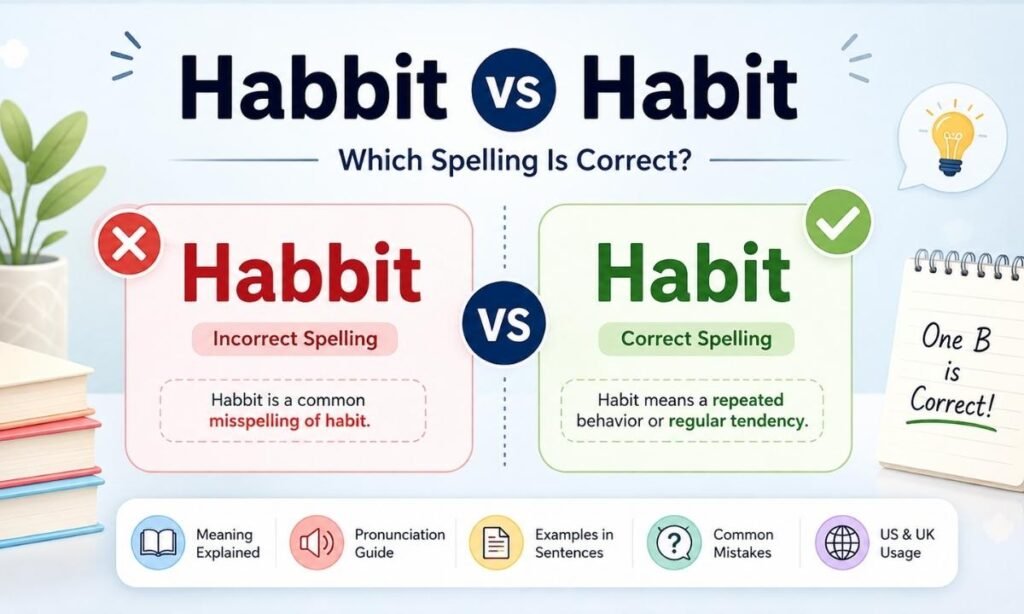
The correct spelling is habit, written with a single letter B. Habbit is not a recognized English word in any dictionary, style guide, or standard reference; it is simply a common typing or spelling slip.
| Spelling | Status | Notes |
| Habit | Correct | Standard spelling in American and British English |
| Habbit | Incorrect | Common misspelling caused by double-consonant confusion |
| Habits | Correct plural | Used for more than one habit |
| Habbits | Incorrect | Misspelled plural form |
What Habit Actually Means?
A habit is a behavior or action that a person repeats so often that it becomes automatic, requiring little or no conscious thought. It can describe a small daily action, a long-term tendency, or a pattern picked up over months or years.
Dictionaries generally describe a habit as something a person does regularly and, often, almost without realizing it. This is what separates a true habit from something you simply decide to do once.
Key qualities of a habit include:
- It is repeated, not a one-time event
- It tends to happen automatically or with little effort
- It can be positive, negative, or neutral
- It usually forms gradually, through repetition over time
Why the Extra B Sneaks In?
The word habit is pronounced with a short vowel sound after the H, and in English, short vowel sounds are frequently followed by doubled consonants in other common words such as rabbit, hobbit, and habit’s close cousin habitual. This pattern tricks the brain into assuming habit should follow the same rule.
Common reasons people write habbit instead of habit include:
- Confusion with similarly sounding words like rabbit
- Assuming double consonants automatically follow short vowels
- Simple typing speed errors
- Non-native speakers applying spelling rules from other words
Once you know the real spelling has only one B, the mistake becomes easy to catch and correct permanently.
Good Habits and Bad Habits in Real Life
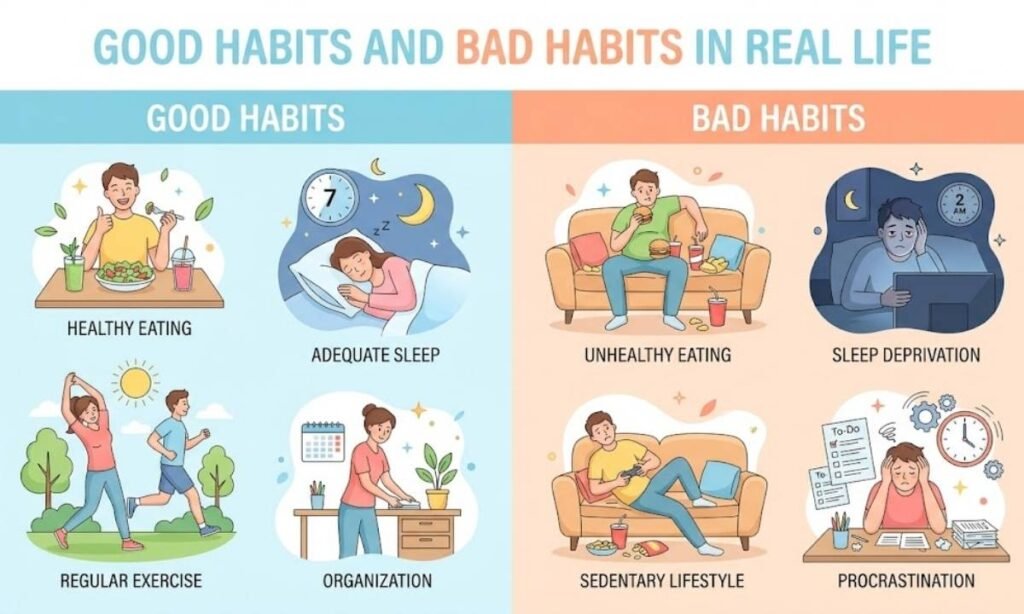
Habits are usually grouped into two broad categories based on their impact on wellbeing, productivity, or health.
Examples of good habits:
- Reading for a few minutes every night
- Drinking enough water daily
- Reviewing tasks before starting work
- Saving a portion of income each month
Examples of bad habits:
- Scrolling on a phone right after waking up
- Procrastinating on important tasks
- Skipping meals irregularly
- Staying up far later than planned
Neither category is fixed forever. Habits can be built intentionally, and they can also be broken with consistent effort.
The Psychology Behind How Habits Form
Behavioral researchers often describe habit formation through a simple loop: a cue triggers a routine action, which is followed by a reward, and repetition strengthens the connection between all three. Over time, the brain starts running this loop automatically, which is why habits feel effortless once established.
This is also why habits are notoriously hard to break. The behavior is not just a choice anymore; it is a learned shortcut the brain relies on to save mental energy. Understanding this loop is often the first step people take when trying to replace an unwanted habit with a healthier one.
Habit vs Addiction: Understanding the Difference
These two words are sometimes used interchangeably, but they are not the same thing. A habit is a repeated behavior that a person can typically stop or adjust with reasonable effort and willpower. An addiction, on the other hand, involves a compulsive dependency, often tied to chemical or psychological changes, where stopping becomes significantly harder without support.
| Aspect | Habit | Addiction |
| Control | Can usually be changed with effort | Often requires structured help or treatment |
| Impact | May be neutral or mildly negative | Typically causes significant harm |
| Origin | Formed through repetition | Often involves physical or psychological dependency |
| Example | Checking email every morning | Substance dependency |
Recognizing this distinction matters because treating a serious addiction as if it were a simple habit can delay someone from seeking appropriate support.
Habit vs Routine
A habit is an automatic behavior, while a routine is a planned sequence of actions performed in a set order. A morning routine might include waking up, showering, and eating breakfast, while checking your phone the moment you open your eyes is a habit embedded inside that routine.
Habit vs Hobby
A hobby is an activity a person chooses to enjoy in their free time, such as painting, gardening, or playing an instrument. A habit is simply something repeated regularly, and it does not need to be enjoyable or intentional the way a hobby usually is.
Habit vs Habitat
These words look similar but mean completely different things. Habit refers to a repeated behavior, while a habitat refers to the natural environment where a plant, animal, or person lives. A simple way to remember the difference: habit is about behavior, habitat is about home.
Spelling, Pronunciation, and Plural Form
The word habit is pronounced HAB-it, with stress on the first syllable. There is no alternate pronunciation associated with the incorrect spelling habbit, since that form does not exist as a real word.
The plural form is habits, formed by simply adding an S. The form habbits is incorrect in every context, whether formal writing, casual conversation, or academic work.
Common Phrases That Use the Word Habit
English includes several fixed expressions built around this word, and understanding them helps with both writing and conversation:
- Break a habit: to stop doing something repeated
- Build a habit: to start doing something consistently until it becomes automatic
- Get into the habit of: to begin doing something regularly
- Out of habit: doing something automatically, without thinking
- Force of habit: an action performed simply because it is routine
- Creature of habit: someone who strongly prefers familiar routines
Other English Words People Often Misspell Like Habit
Habit is not alone. Several English words follow similar short-vowel patterns that trick writers into adding unnecessary letters.
| Correct Spelling | Common Misspelling |
| Habit | Habbit |
| Habitual | Habitual (correct, sometimes miswritten as habittual) |
| Committed | Comited |
| Occurred | Occured |
| Definitely | Definately |
Recognizing these patterns across multiple words helps build stronger overall spelling accuracy, rather than memorizing exceptions one at a time.
Simple Writing Tips to Avoid Common Spelling Errors
- Read the word aloud slowly and break it into syllables
- Use a reliable dictionary or built-in spell checker before publishing
- Keep a personal list of words you frequently misspell
- Pay extra attention to short, common words, since they are easy to type on autopilot
- When unsure, search the exact word rather than guessing from memory
Why Correct Spelling Matters for SEO and Professional Writing?
Search engines and readers both associate correct spelling with credibility. In professional writing, resumes, emails, and published content, a spelling error like habbit can quietly undermine trust even when the rest of the writing is strong. For content creators, using the correct spelling also ensures the page matches what search engines recognize as the standard, dictionary-verified term, which supports better visibility in search results.
Conclusion
Habit is the correct spelling, written with a single B, and it refers to a repeated behavior or tendency that often becomes automatic over time. Habbit is not a real word in any form of English and should always be corrected to habit.
Keeping this simple rule in mind, along with understanding related words like routine, hobby, and habitat, makes everyday writing clearer, more accurate, and more professional.
Frequently Asked Questions
Is habbit a real English word?
No, habbit is not a recognized word in any English dictionary. The correct spelling is always habit.
Is it habit or habbit?
Habit is correct. Habbit is simply a common misspelling of the same word.
Does habit have one B or two?
Habit has only one B. Adding a second B is incorrect in every context.
Why do people spell habit as habbit?
It usually happens because short vowel sounds in other words are often followed by double consonants, which creates confusion.
What is the plural of habit?
The plural is habits. Habbits is not a correct spelling in any situation.
What is the difference between habit and routine?
A habit is an automatic behavior, while a routine is a planned sequence of actions performed in order.
How do you pronounce habit?
Habit is pronounced HAB-it, with the stress placed on the first syllable.