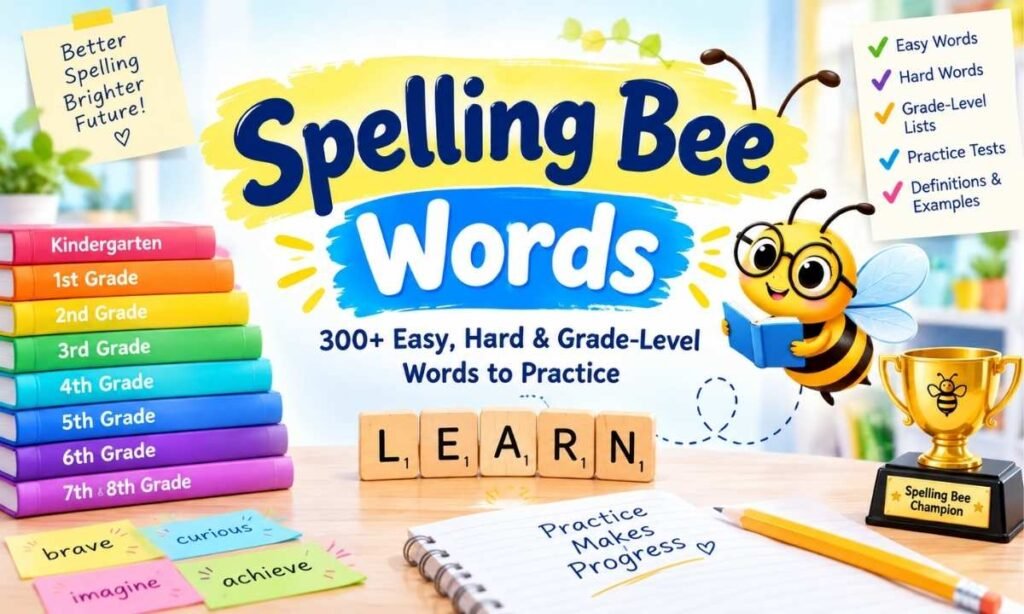
Getting ready for a spelling bee can feel exciting and a little stressful at the same time, especially when you are not sure which words to study first. Whether you are a parent helping a first grader, a teacher building a classroom list, or an adult who simply loves language, having the right Spelling Bee Words in front of you makes practice far more effective.
This guide brings together easy words, grade based lists, championship level vocabulary, and simple study methods in one place. You will also find practical tips, two quick reference tables, and answers to the questions people ask most often about spelling bee preparation.
What Is a Spelling Bee and Why Word Lists Matter?
A spelling bee is a competition where participants are asked to spell words correctly out loud, often after hearing the word used in a sentence. Bees range from small classroom events to national contests such as the Scripps National Spelling Bee, which publishes official study lists including the School Spelling Bee Study List and the Words of the Champions list.
Word lists matter because they give structure to practice. Instead of guessing which vocabulary might come up, students can work through words organized by grade, theme, or difficulty, which builds confidence and reduces exam day surprises.
Easy Spelling Bee Words for Young Beginners
New spellers do best with short, phonetic words that follow predictable spelling patterns. These words help build the habit of sounding out letters before moving on to trickier vocabulary.
- cut, net, hot, bed, jaw
- rock, doll, fine, cube, sent
- apple, happy, garden, letter, yellow
- magic, planet, forest, basket, window
Table 1: Sample Easy Words by Early Grade Level
| Grade Level | Focus Area | Example Words |
| Kindergarten | Letter sounds and short vowels | cat, sun, dog, top, red |
| First Grade | Simple three and four letter words | cut, net, hot, lad, mom |
| Second Grade | Blends and common sight patterns | lash, sent, pill, cube, germ |
| Third Grade | Multi syllable everyday words | strip, cedar, tools, tasty, tight |
Spelling Bee Words by Grade Level
As students move through school, spelling bee vocabulary grows in length and complexity. Below is a general progression many classroom and district bees follow.
- Fourth grade: symbol, cancel, washed, happen, forest, chorus
- Fifth grade: rooster, hatchet, satisfy, chamber, harness, evident
- Sixth grade: bothered, generate, reckless, research, skeleton, relative
- Seventh grade: scripture, pulverize, companion, universal, certainly
- Eighth grade: dialogue, conscience, collate, insurgence, vaccine
Each level tends to introduce new prefixes, suffixes, and word origins, which prepares students for the more academic vocabulary used in middle and high school competitions.
Hard and Championship Level Spelling Bee Words
Once spellers move beyond school level bees, vocabulary shifts toward words with Latin, Greek, and French roots that rarely appear in everyday conversation. National level competitors study words such as:
- moratorium
- subterfuge
- pneumonia
- juxtaposition
- onomatopoeia
- indefatigable
- connoisseur
These words test not only memory but also a speller’s understanding of language origin, which is why top competitors spend time on etymology rather than pure memorization.
Spelling Bee Words for Adults and Advanced Learners
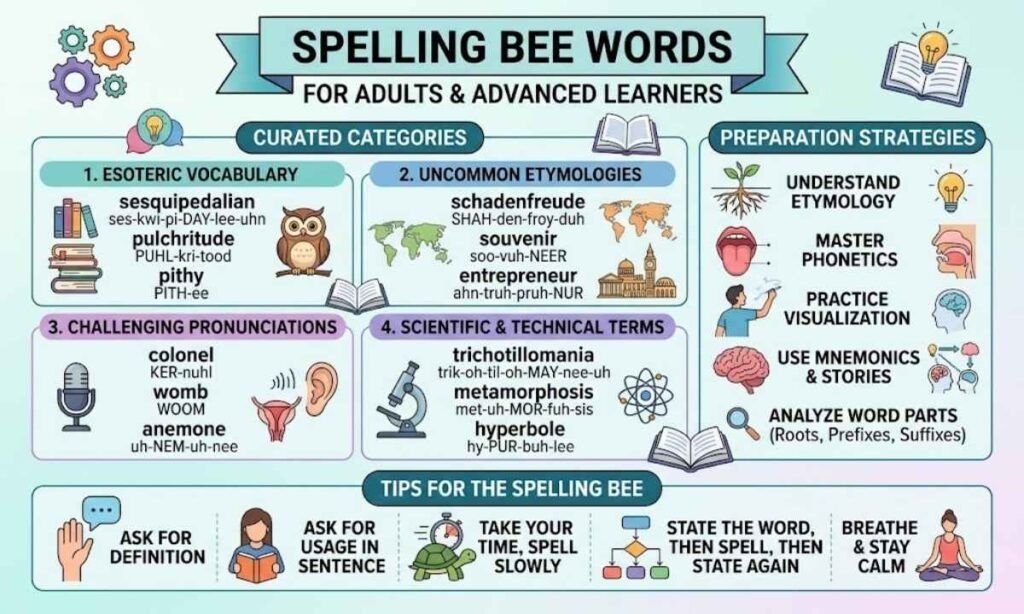
Adult spelling bees, workplace trivia nights, and personal challenges often call for vocabulary that stretches beyond school lists. Good adult level practice words include:
- bureaucracy
- idiosyncrasy
- entrepreneur
- mischievous
- questionnaire
- liaison
- embarrassment
Adults preparing for a bee benefit from timed practice sessions and from writing words out by hand, since typing tends to skip over tricky letter combinations.
Tricky Spelling Patterns That Trip Up Spellers
Certain patterns cause more mistakes than others, regardless of a speller’s age or grade. Recognizing these patterns in advance makes them far less intimidating.
Table 2: Common Difficult Spelling Patterns
| Pattern Type | What Makes It Hard | Example Words |
| Silent letters | Letters that are written but not spoken | knight, gnome, subtle, wednesday |
| Double letters | Easy to miss when writing quickly | accommodate, embarrass, occurrence |
| Homophones | Sound the same but spelled differently | there, their, they’re |
| Foreign origin words | Spelling does not follow English rules | rendezvous, connoisseur, cafe |
How to Study and Memorize Spelling Bee Words?
Effective study is less about repetition and more about active engagement with each word. A few methods that consistently help spellers retain vocabulary include:
- Learning the definition and part of speech before memorizing letters
- Breaking long words into syllables and saying each part aloud
- Writing the word by hand several times instead of only reading it
- Using the word in an original sentence to reinforce context
- Reviewing missed words again within twenty four hours
Spacing practice across several short sessions tends to work better than one long cramming block the night before a competition.
Fun Spelling Bee Word Games and Apps to Practice With
Turning practice into a game keeps young spellers motivated and makes review sessions feel less like homework.
- Flashcard apps that quiz users on random words from a saved list
- Word scramble games that rebuild jumbled letters into the correct spelling
- Family style oral quizzes where a parent reads the word and a sentence aloud
- Timed spelling races between siblings or classmates
- Printable crossword puzzles built from the week’s practice words
Mixing formats keeps the brain from relying only on visual memory and strengthens listening and recall skills as well.
Common Mistakes Spellers Make and How to Fix Them
Even strong spellers repeat the same small errors under pressure. Watching for these patterns can prevent avoidable point losses.
- Rushing to answer without asking for the word’s definition or origin
- Guessing at silent letters instead of asking the pronouncer to repeat the word
- Skipping double letters when writing quickly
- Forgetting to ask whether a word has alternate accepted spellings
- Ignoring word roots that hint at the correct letter combination
Slowing down for just a few extra seconds before answering solves most of these issues.
Using Root Words, Prefixes, and Suffixes to Crack Difficult Words
Many advanced spelling bee words follow predictable building blocks borrowed from Latin and Greek. Learning these pieces turns unfamiliar words into manageable puzzles.
- Bio relates to life, as seen in biology and biography
- Tele relates to distance, as seen in telephone and telescope
- Ology means the study of, as seen in geology and psychology
- In or Im often means not, as seen in indefinite and impossible
- Able or Ible means capable of, as seen in comfortable and flexible
Once a speller recognizes a root, guessing the rest of the word becomes far more manageable, even under competition pressure.
Tips for Parents and Teachers Building a Spelling Bee Word Bank
A strong word bank grows over time rather than appearing all at once. Parents and teachers can build one gradually with these steps:
- Start with words the student already struggles with in everyday writing
- Add five to ten new words each week rather than overwhelming the list
- Group words by theme, such as nature, science, or history, to aid memory
- Review the full bank every few weeks instead of only studying new entries
- Keep a printable or digital copy so practice can happen anywhere
A well organized word bank becomes a reusable resource for future bees, not just the current competition season.
Frequently Asked Questions
What are good words for a spelling bee?
Good words match the speller’s grade level and mix common vocabulary with a few challenging root based terms.
What are the hardest spelling bee words?
Championship level words like indefatigable, subterfuge, and onomatopoeia are widely considered among the hardest.
How do I prepare for a spelling bee?
Study a grade appropriate word list, practice aloud daily, and review any words you get wrong within the same day.
What words should a first grader know for a spelling bee?
First graders typically practice short, three to four letter phonetic words such as cut, hot, net, and mom.
What are good spelling bee words for kids?
Kid friendly words balance everyday vocabulary with a few slightly longer terms to build gradual confidence.
How many words should I study for a spelling bee?
Most coaches suggest studying fifty to one hundred words at a time, reviewing them in smaller weekly batches.
Where can I find spelling bee word lists?
Official lists are available through Scripps National Spelling Bee resources, school study guides, and grade based practice sites.
Conclusion
Spelling bee success comes from steady, focused practice rather than last minute memorization. Starting with easy words, moving through grade level lists, and gradually introducing root based vocabulary gives every speller, whether a young student or an adult enthusiast, a clear and achievable path forward.
Use the tables and word groups above as a starting point, and keep adding new terms as confidence grows.