

The correct spelling is believe, not beleive and not belive. Both of those alternate versions are among the most common English spelling mistakes, mainly because the word breaks the usual “i before e” pattern in a confusing way.
This guide covers the right spelling, why people mix it up, how to pronounce it, related word forms, and a simple trick that makes the spelling stick for good.
How Do You Spell Believe Correctly?
Believe Is the Correct Spelling
Believe follows the pattern i-e-v-e after the initial “bel,” and it is the only accepted spelling in standard English dictionaries.
Is It Believe, Beleive, or Belive?
Believe is correct. Beleive is a simple letter-order mistake, and belive is an outdated or archaic spelling rarely used in modern writing.
What Does Believe Mean?
Believe means to accept something as true or to have confidence in a person, idea, or outcome, often without needing direct proof.
Believe vs. Beleive vs. Belive
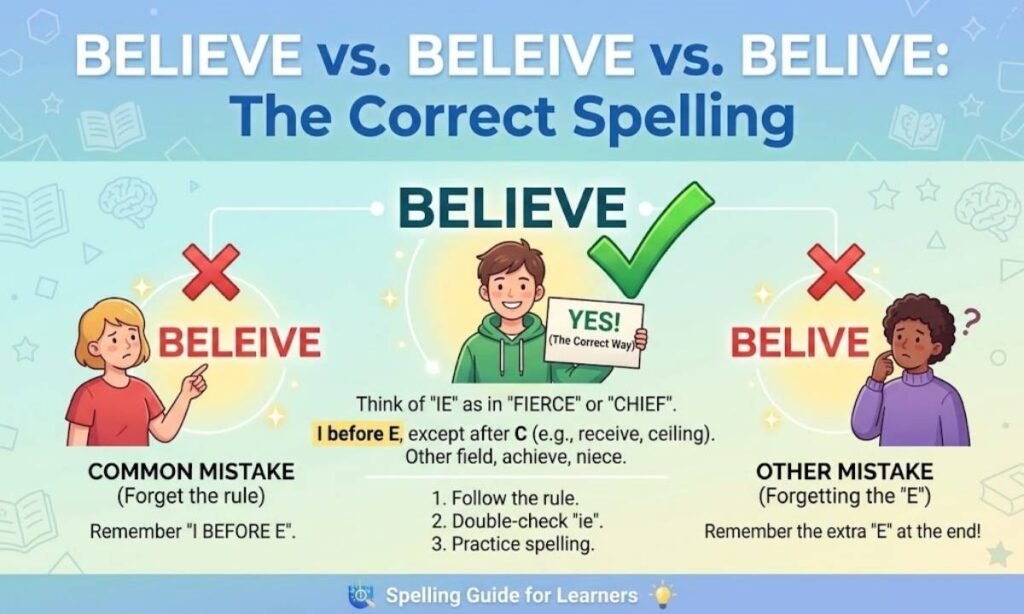
Seeing all three side by side makes the difference easy to remember.
| Spelling | Status | Why It’s Wrong or Right |
| Believe | Correct | Matches standard English spelling rules |
| Beleive | Incorrect | Letters e and i are swapped |
| Belive | Incorrect in modern use | Missing the second e, once archaic English |
A Quick Spelling Comparison
Whenever you’re unsure, check for the letter pattern “iev” right after “bel.” If that pattern is missing, the spelling is wrong.
The Easiest Trick to Remember Believe
Remember the LIE in Believe
Believe contains the word “lie” hidden inside it: bel-lie-ve. Since a lie is something you don’t believe, the phrase “never believe a lie” helps lock in the correct letter order.
Break the Word Into Syllables
Splitting the word into be-lieve makes the spelling less overwhelming and easier to type correctly every time.
Connect Believe With Belief
Since belief is spelled with the same “ie” pattern, remembering one word reinforces the spelling of the other.
The I Before E Reminder
The classic rule “i before e, except after c” applies here, since there’s no c in believe, so i comes before e.
Why Is Believe So Easy to Misspell?
The Confusing IE and EI Letter Order
English has many exceptions to spelling rules, and readers often reverse the i and e purely out of habit from other words.
Why Pronunciation Can Be Misleading?
The word is pronounced buh-LEEV, and the long “ee” sound doesn’t clearly indicate whether the i or the e comes first.
Why the Word Looks Like Beleive?
Because so many other English words follow “ei” patterns, like “receive” or “ceiling,” writers sometimes apply that pattern here by mistake.
Why the Second E Matters?
Dropping the final e, as in “believ,” is another common typing slip that changes the word into an incomplete spelling.
How to Pronounce Believe?
Believe Pronunciation in American English
In American English, believe is pronounced buh-LEEV, with stress on the second syllable.
Believe Pronunciation in British English
British English pronounces it almost identically, with only a slightly softer “r” influence in connected speech.
Believe vs. Belief Pronunciation
Believe ends with a soft “v” sound, while belief ends with an “f” sound, even though both words share the same root spelling pattern.
How Pronunciation Helps You Spell It?
Saying the word slowly as be-lieve, rather than quickly, can help reinforce the correct letter sequence when writing it.
Believe Meaning and Examples
Believe Meaning in Simple English
To believe something means you think it’s true or trustworthy, even without complete proof.
Believe in a Sentence
“I believe you did your best on the exam.”
Believe in Someone or Something
“She believes in her team, even during a tough season.”
Believe That Example Sentences
“They believe that hard work eventually pays off.”
Common Misspellings of Believe
Recognizing these patterns helps you catch mistakes before hitting send.
- Beleive instead of believe
- Belive instead of believe
- Beliveing instead of believing
- Believed misspelled as beleived
- Believer misspelled as beleiver
| Wrong Spelling | Correct Spelling |
| Beleive | Believe |
| Belive | Believe |
| Beliveing | Believing |
| Beleived | Believed |
| Beleiver | Believer |
- Believe Word Forms You Should Know
Knowing the related forms prevents the same mistake from repeating in different tenses.
- Believe: base verb form
- Believes: present tense, third person
- Believed: past tense
- Believing: present participle
- Believer: a person who believes
- Believable: capable of being believed
- Belief: the noun form of believe
Does I Before E Except After C Work for Believe?
Why Believe Uses IE?
Since there is no c before the vowel pair in believe, the standard i-before-e pattern applies correctly here.
Believe vs. Receive
Receive uses “ei” because it follows a c, which is exactly the exception the classic rule refers to.
The Rule Is a Memory Aid Not a Perfect Rule
English has plenty of exceptions, so treat the rule as a helpful guideline rather than a guarantee for every word.
Common IE and EI Exceptions
Words like weird, seize, and neighbor break the pattern entirely, showing why memorization still matters alongside the rule.
Believe vs. Belief: What Is the Difference?
Believe Is a Verb
Believe describes an action, as in “I believe this plan will work.”
Belief Is a Noun
Belief describes a concept or idea, as in “Her belief in the plan never wavered.”
Believe and Belief in Example Sentences
“He believes in second chances” uses the verb, while “His belief in second chances is strong” uses the noun.
A Simple Way to Remember the Difference
If the word follows “I” or “you” as an action, it’s believe. If it follows “a” or “his/her,” it’s usually belief.
How to Use Believe in Everyday Writing?
Believe in Text Messages
“I believe you, don’t worry about it.”
Believe in Emails
“I believe this proposal addresses the client’s main concerns.”
Believe in School Writing
“The author wants readers to believe the character’s transformation is genuine.”
Believe in Professional Sentences
“Our team believes this strategy will improve quarterly results.”
Frequently Asked Questions
How do you spell believe correctly?
The correct spelling is believe, with the letter pattern i-e right after “bel.”
Is it believe or beleive?
Believe is correct; beleive incorrectly swaps the i and e.
Is it belive or believe?
Believe is correct; belive is missing the second e and is considered outdated.
What is the easiest way to remember believe?
Remember that believe contains the word “lie,” since bel-lie-ve holds the correct letter order.
Does believe follow the i before e rule?
Yes, since there’s no c before the vowels, believe follows the standard i-before-e pattern.
How do you spell believing?
Believing is spelled b-e-l-i-e-v-i-n-g, keeping the same root spelling as believe.
What is the difference between believe and belief?
Believe is a verb describing an action, while belief is the noun form describing an idea or conviction.
How do you pronounce believe?
Believe is pronounced buh-LEEV, with the stress falling on the second syllable.
Conclusion
Believe is the only correct spelling, while beleive and belive are common mistakes worth avoiding. The easiest way to lock it in is remembering the hidden word “lie” inside believe, paired with the classic i-before-e rule. With that trick in mind, spelling this word correctly becomes second nature in texts, emails, and everyday writing.